 bors[bot]
b1cb4ac13d
bors[bot]
b1cb4ac13d
5693: Fix no inlay hints / unresolved tokens until manual edit to refresh r=jonas-schievink a=Veetaha Fixes https://github.com/rust-analyzer/rust-analyzer/issues/5349 Now we return ContentModified during the workspace loading. This signifies the language client to retry the operation (i.e. the client will continue polling the server while it returns ContentModified). I believe that there might be cases of overly big projects where the backoff logic we have setup in `sendRequestWithRetry` (which we use for inlay hints) might bail too early (currently the largest retry standby time is 10 seconds). However, I've tried on one of my project with 500+ dependencies and it is still enough. Here are the examples before/after the change (the gifs are quite lengthy because they show testing rather large cargo workspace). <details> <summary>Before</summary> Here you can see that the client receives empty array of inlay hints and does nothing more. Same applies to semantic tokens. The client receives unresolved tokens and does nothing more. The user needs to do a manual edit to refresh the editor.  </details> <details> <summary>After</summary> Here the server returns ContentModified, so the client periodically retries the requests and eventually receives the wellformed response. 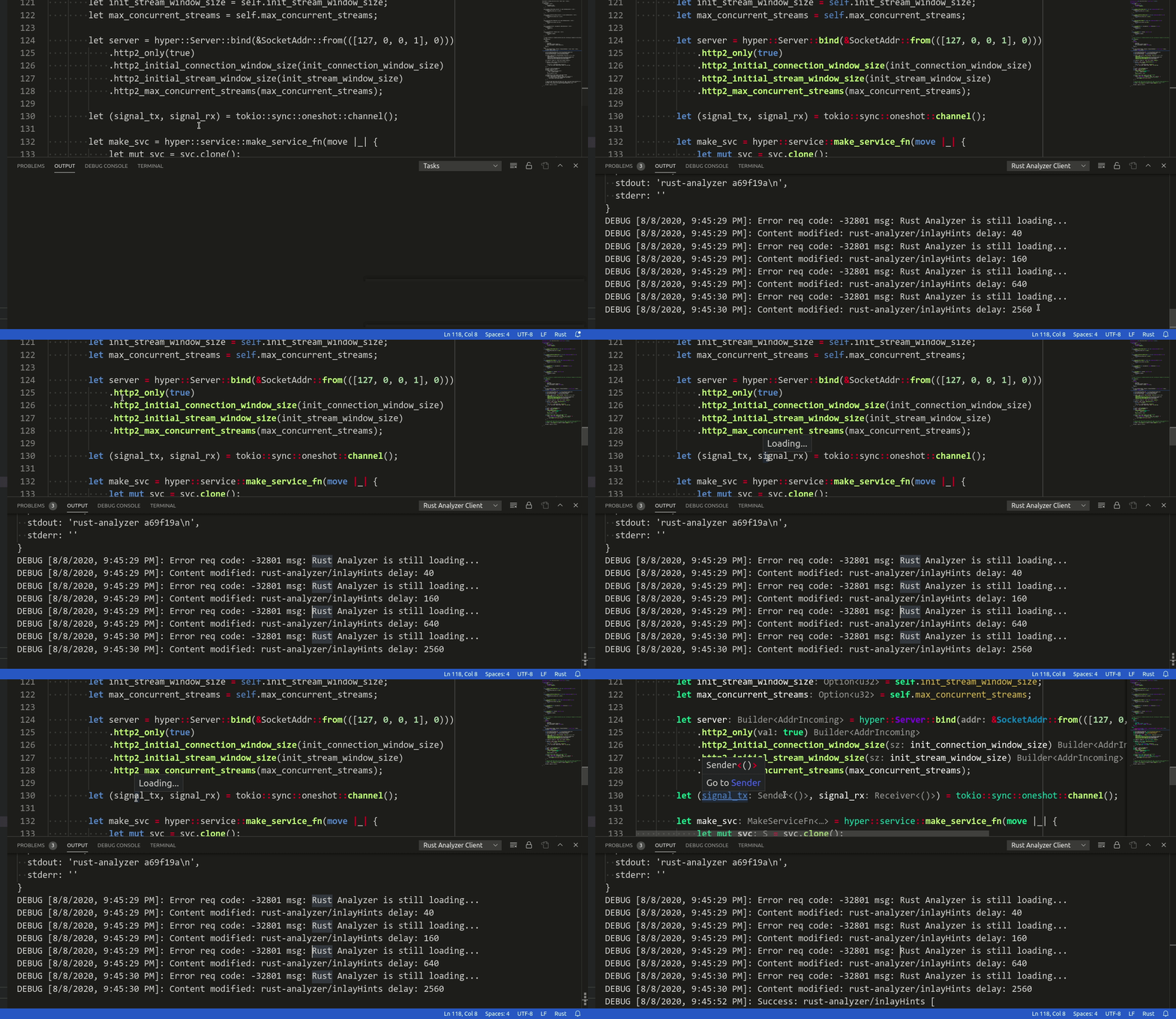 </details> Co-authored-by: Veetaha <veetaha2@gmail.com>



rust-analyzer is an experimental modular compiler frontend for the Rust language. It is a part of a larger rls-2.0 effort to create excellent IDE support for Rust.
Work on rust-analyzer is sponsored by

Quick Start
https://rust-analyzer.github.io/manual.html#installation
Documentation
If you want to contribute to rust-analyzer or are just curious about how things work under the hood, check the ./docs/dev folder.
If you want to use rust-analyzer's language server with your editor of choice, check the manual folder. It also contains some tips & tricks to help you be more productive when using rust-analyzer.
Communication
For usage and troubleshooting requests, please use "IDEs and Editors" category of the Rust forum:
https://users.rust-lang.org/c/ide/14
For questions about development and implementation, join rls-2.0 working group on Zulip:
https://rust-lang.zulipchat.com/#narrow/stream/185405-t-compiler.2Frls-2.2E0
Quick Links
- Website: https://rust-analyzer.github.io/
- Metrics: https://rust-analyzer.github.io/metrics/
- API docs: https://rust-analyzer.github.io/rust-analyzer/ra_ide/
License
Rust analyzer is primarily distributed under the terms of both the MIT license and the Apache License (Version 2.0).
See LICENSE-APACHE and LICENSE-MIT for details.